
An African trip spreads across the Mediterranean
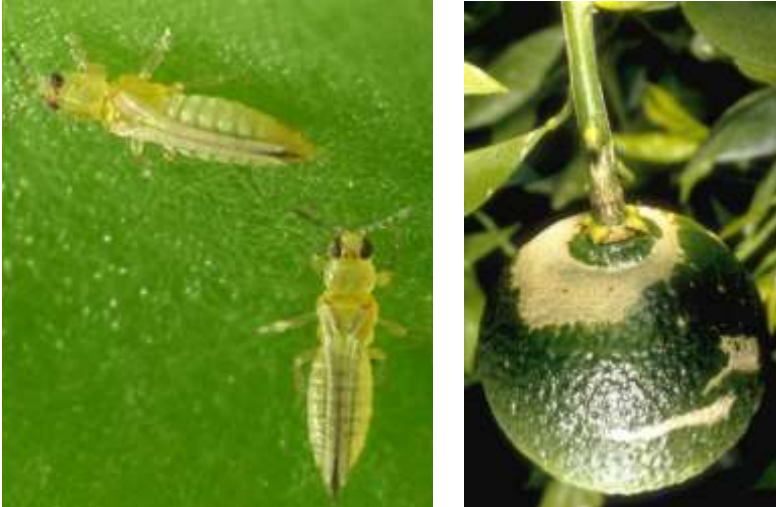
Climate change is creating favourable conditions for the proliferation of agricultural pests, and Mediterranean agriculture is no exception. Since the beginning of the summer, a threat to citrus has been observed in the form of a thrips in crops in the south of Alicante. The pest, identified as Scirtothrips aurantii, originates from Africa and Yemen, and was first detected in Spain in November 2020 in the province of Huelva. In addition to citrus, this pest is also suspected to affect persimmons in the region of La Ribera and could spread to other producing areas in southern Portugal and Seville.
Economic impact on citrus
Scirtothrips aurantii is a polyphagous pest that affects more than 70 plant species, with a significant impact on citrus, especially orange varieties. The damage caused by this insect is mainly on the fruit, reducing its commercial value and limiting its use to industrial processes. Larvae and adults attack fruits and buds in formation, causing important losses for growers. The pest has been detected in several locations in Alicante and Valencia, which has set off alarm bells among growers.
Control and prevention measures
In response to the detection of Scirtothrips aurantii, the Spanish Ministry of Agriculture published in February 2021 a contingency plan to control and combat this pest within the National Programme for the Implementation of Phytosanitary Regulations. The measures include constant monitoring and the application of specific phytosanitary treatments to reduce the spread of thrips. The Unió Llauradora has warned of the high risk of new pests due to the import of fresh fruit from third countries, underlining the need to reinforce indigenous production and border control measures.
Impact on the agricultural sector
In addition to citrus, Scirtothrips aurantii also affects avocado, table grape and persimmon crops, compromising the quality and commercial value of these products. Interceptions of imported citrus with pests such as False Moth and Black Spot have increased, reinforcing the need to improve phytosanitary guarantees for imported products. According to the Unió Llauradora, it is crucial to extend cold treatment to all countries of origin and to more citrus varieties to avoid the introduction of new pests that could destabilise the European citrus sector.
The occurrence of Scirtothrips aurantii is a serious threat to citrus and other crops in the Mediterranean. However, with appropriate control measures and a focus on local production, its impact can be mitigated and regional agriculture protected. At Cocalni we care about our orange groves.


