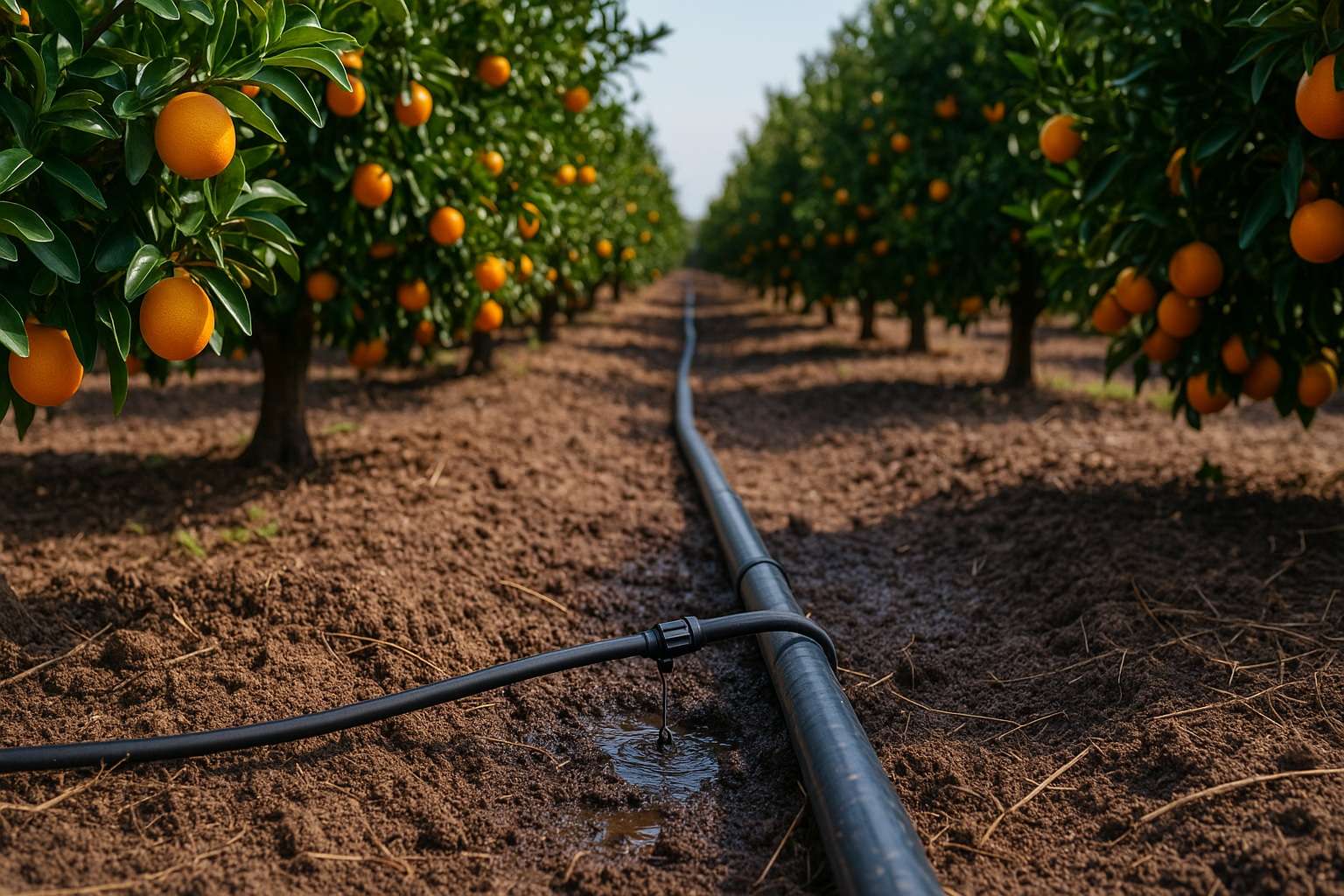
The Valencian Institute of Agricultural Research (IVIA) has demonstrated in a recent study that increasing the wet surface area in drip irrigation improves water use efficiency in crops. This technique consists of expanding the area of soil that receives water, providing the roots with a greater volume of moisture and reducing losses due to evaporation or deep percolation.
Benefits of increasing the wet surface area
According to the IVIA, this adjustment in irrigation offers key advantages:
- Better use of water: the amount of water that actually reaches the plant is optimised.
- Improved crop yields: having a higher moisture content promotes root development and nutrient absorption.
- Reduction of water losses: by reducing evaporation and deep seepage, the overall efficiency of the system is increased.
Implications for agriculture
This finding is particularly relevant in the context of water scarcity and the need for agricultural sustainability. Farmers who implement this strategy can achieve more responsible water use, improving productivity without increasing consumption.
The IVIA study has become a benchmark for the agricultural sector, providing practical solutions that can be applied to farms with different characteristics.
📌 You can read the full article at Agronews Comunitat Valenciana: The IVIA confirms that increasing the wetted area improves the efficiency of drip irrigation.


