
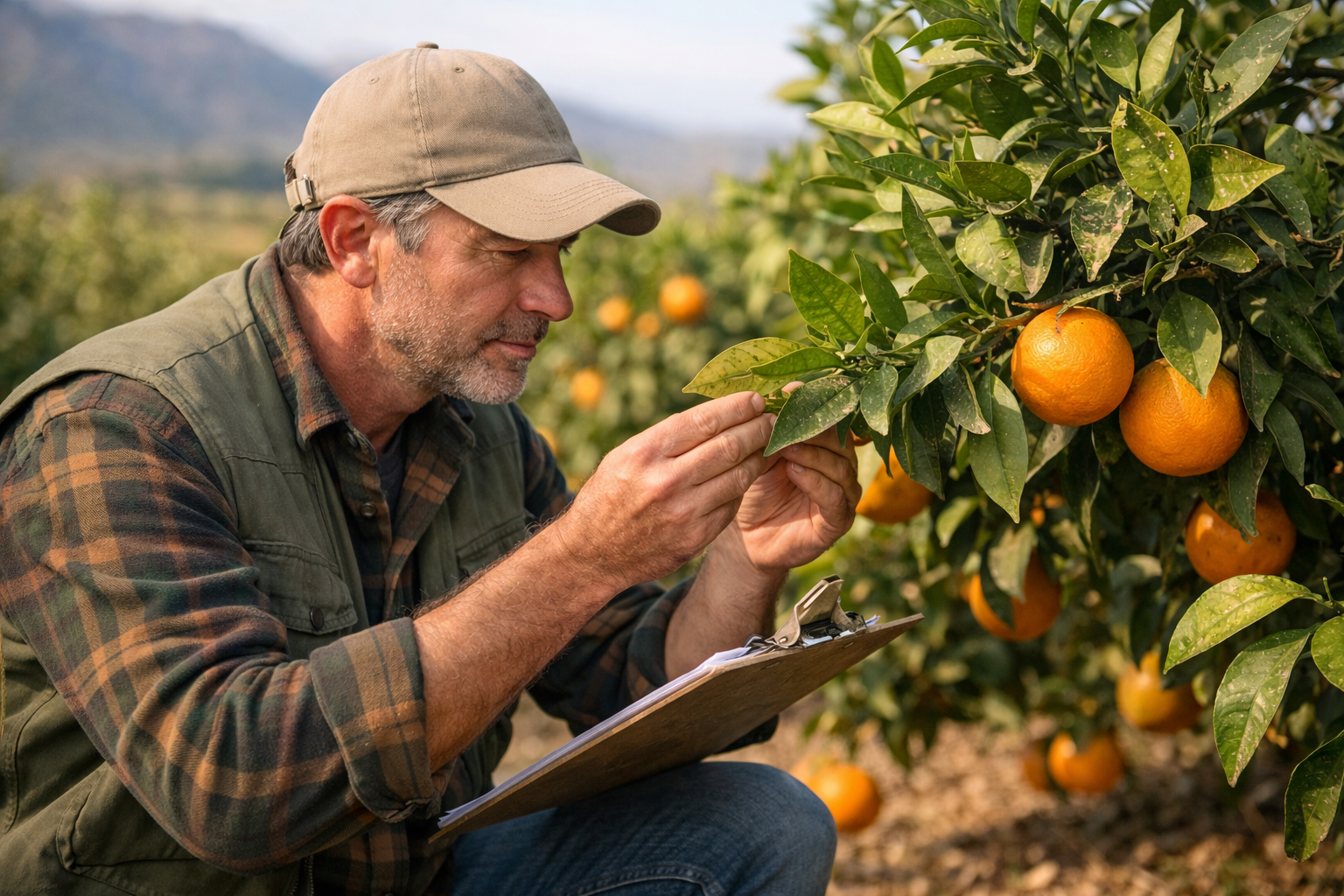
Citrus cultivation is one of the cornerstones of agriculture in the Valencian Community. However, as with any crop, orange and mandarin trees can be affected by various pests and diseases that directly impact fruit production and quality.
Understanding which ones are most common and how to manage them is key to maintaining healthy and productive orchards. Below, we review some of the main pests and diseases that affect citrus trees in our region.
Fruit fly (Ceratitis capitata)
The fruit fly is one of the most common pests affecting citrus fruits.
The female lays her eggs inside the fruit, and when the larvae hatch, they feed on the pulp, causing damage that leads to rapid spoilage of the fruit.
Major damage
- Bites on the fruit's skin
- Internal rot
- Premature fruit drop
How is it controlled?
This pest is controlled primarily by setting up traps to monitor its presence, applying approved treatments when necessary, and conducting ongoing technical monitoring throughout the season to detect potential population increases early and take effective action.
Cotonet of South Africa
The citrus mealybug has become one of the most significant problems facing the citrus industry in recent years. This insect feeds on the sap of the fruit and causes deformities that reduce its commercial value.
Most Common Types of Damage
- fruit deformation
- presence of molasses
- development of dark patches on the skin
Various biological control strategies are currently being implemented to reduce their impact on fields.
Spider mite
Spider mites mainly appear during dry, warm periods.
This mite feeds on the tree's leaves, weakening it and reducing its productivity.
Symptoms
- leaves with a yellowish or silvery tint
- premature leaf drop
- general weakening of the tree
Monitoring the population is key to preventing it from becoming a serious problem.
Aphids
Aphids are another common pest of citrus trees, especially during the budding season. They feed on tender shoots and can cause deformities in young leaves and branches. They also produce honeydew, which promotes the growth of fungi such as sooty mold.
Fungal Diseases in Citrus
In addition to pests, citrus fruits can also be affected by various fungal diseases.
Among the most common are:
Wilt or Phytophthora
It causes fruit rot, especially during periods of heavy rain.
Alternaria
It primarily affects certain varieties of mandarins and can cause leaf drop and damage to the fruit.
The Importance of Crop Management and Monitoring
Prevention is one of the most important factors in keeping citrus fruits in good condition.
Proper crop management, combined with technical monitoring and the use of integrated pest management strategies, helps reduce the impact of these pests and diseases.
In cooperatives such as Cocalni, collaboration between farmers and technicians is key to addressing these challenges and continuing to produce high-quality citrus fruits.


