
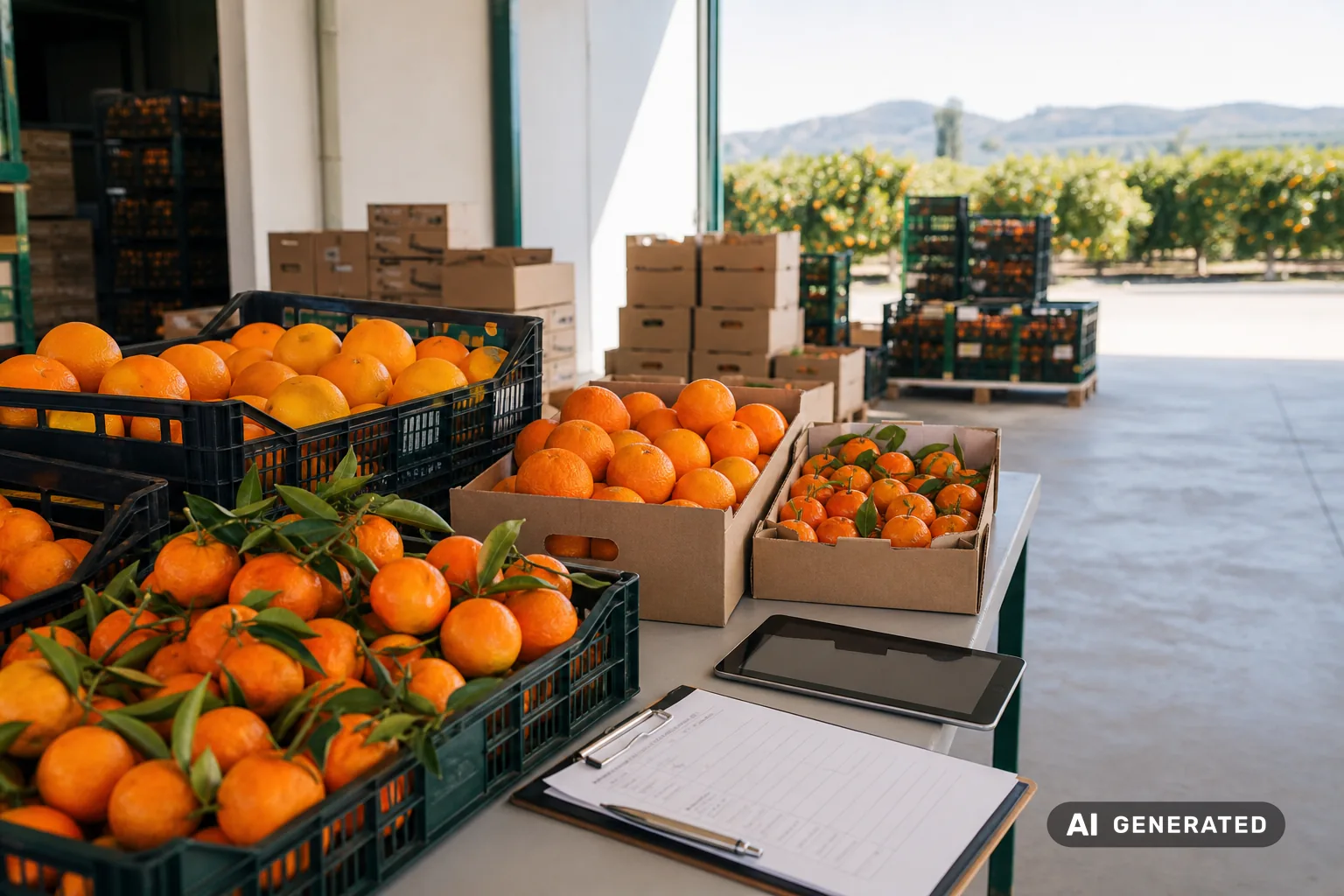
Buying oranges and mandarins for distribution, retail or food service involves more than comparing a price per kilogram. A professional customer needs the product, format and service to fit their operation. When choosing a citrus supplier, the whole proposal should therefore be assessed rather than a single feature.
A citrus cooperative coordinates fruit from different farms and prepares it for different markets. This structure can support a varied offering, season-based planning and professional communication. Below are the points that help make a more precise commercial enquiry.
1. Define the citrus fruit your business needs
First specify the need: oranges or mandarins, approximate period, volume, delivery frequency and commercial destination. Intended use also matters. A specialist shop does not have the same requirements as a distribution platform or food-service business.
The availability of each variety changes during the season. Consulting Cocalni’s harvest calendar and product range helps direct the enquiry towards options handled at each time of year.
2. Check varieties, calendar and continuity
Continuity does not mean always having the same variety. It means planning coherent alternatives as the season progresses. A professional supplier should explain which varieties are available, their approximate dates and what transition can be proposed between them.
Sharing volume and date forecasts helps the buyer receive a realistic response. The more specific the enquiry, the easier it is to assess availability, format and conditions.
3. Assess formats and presentation
Packaging affects handling, display, transport and product turnover. State whether loose fruit, boxes, nets or another available presentation is required, together with the preferred weight or sales unit.
Not every format suits every channel. The choice should consider storage space, turnover, display and the final customer’s needs. An initial conversation avoids requesting a presentation that later complicates operations.
4. Ask about traceability and controls
Traceability links a batch to its origin, the processes carried out and its destination. For a professional customer, clear identification supports reception, document management and responses to queries or incidents.
It is also useful to know which controls, procedures and certifications form part of the supplier’s working system. The Our commitment page provides information about Cocalni’s production lines and certifications.
5. Clarify logistics and commercial terms
Before closing an operation, the delivery point, frequency, lead times, minimum quantities where applicable and relevant terms should be clear. These elements can be as important as the product itself.
Distance, order preparation and the campaign calendar influence the proposal. It would therefore be irresponsible to promise a universal solution: each request must be assessed according to product, volume, destination and actual availability.
6. Look for clear communication
A good B2B relationship needs direct information and shared expectations. The buyer should be able to explain their channel and priorities; the supplier should respond with specific details and flag any relevant limits.
Before requesting a quote, prepare a short brief with product, variety if known, format, estimated volume, delivery location, frequency and desired date. This reduces exchanges and supports a tailored response.
A citrus cooperative for professional enquiries
Cocalni works with oranges and mandarins in different varieties and formats from its facilities in Les Alqueries and Vila-real. If you are looking for a citrus supplier for your business, send the basic details of your needs so the team can assess the enquiry.
State the product, format, approximate volume and destination. Contact Cocalni and receive information tailored to your professional enquiry.


