
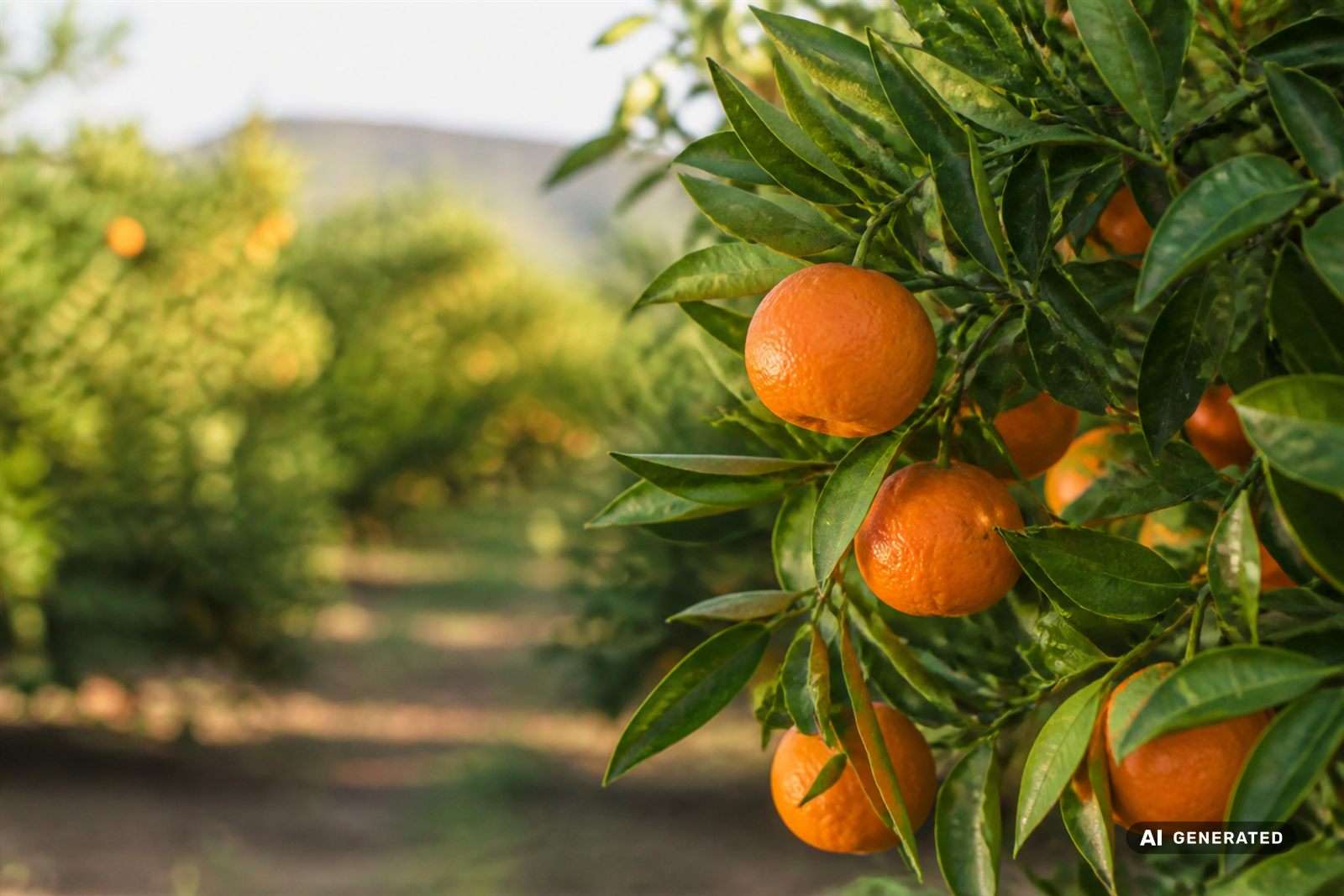
Citrus fruit with leaves stands out because part of the tree remains visible in its presentation. For consumers it evokes the orchard; for professional buyers it also raises practical questions about appearance, handling, timing and service.
However, leaves alone should not be treated as a guarantee of quality. Variety, harvest timing, conditioning, transport and storage also influence the condition in which oranges and mandarins reach their destination. It is therefore important to understand what this presentation means and how to assess it in professional purchasing.
What is citrus fruit with leaves?
This term refers to oranges or mandarins sold with a short piece of stem and a few green leaves attached. European marketing standards allow this presentation provided that the branch is short and non-woody.
The leaf is part of the presentation, but it does not replace the requirements the fruit must meet. Citrus intended for the fresh market must satisfy criteria for integrity, soundness, cleanliness and conditioning. Both product and packaging must be properly protected throughout marketing.
Cocalni promotes product lines with leaves associated with freshly harvested fruit, without cold-room or storage periods. Actual availability depends on the variety, season, format and the conditions agreed for each order.
What does this presentation offer?
An appearance linked to origin
Leaves retain a direct visual reference to the tree and help distinguish the product at the point of sale. In greengrocers, specialist shops and fresh-produce sections, they can support a more natural and recognisable display.
That value is mainly visual and commercial. A green leaf is appealing, but buyers should assess the lot as a whole: variety, size, uniformity, external condition, identification and suitability for the sales channel.
Handling that requires care
Leaves add volume and may rub against other fruit during packing and transport. Preparation should ensure the branch is short and that the presentation does not damage the fruit. Packaging and arrangement should also preserve the expected appearance through delivery.
For professional customers, this means format is not a minor detail. Box type, weight, arrangement and expected stock rotation should form part of the commercial enquiry.
A product tied to the seasonal calendar
Not all varieties are available at the same time. Cocalni works with clementines, hybrids and oranges at different points in the season. The Cocalni harvest calendar shows the approximate periods for each variety.
Harvest dates can vary from one season to another because of field conditions and the fruit’s actual development. The calendar is useful for planning, but final availability must be confirmed with the sales team.
How to assess oranges and mandarins with leaves
Assess the whole lot, not just the leaf
Leaf colour and firmness can change after harvest. On their own, these features do not reveal the product’s full history. A professional assessment should include fruit condition, lot uniformity, presentation and lot information.
Traceability helps connect each lot with its origin and journey. To learn more about this process, see our article on citrus traceability in a cooperative.
Confirm the variety and marketing period
“Mandarins with leaves” or “oranges with leaves” is still too broad a description for an order. The variety—or at least the period, intended use and desired commercial characteristics—should be specified.
Transitions between varieties can maintain supply through much of the season, but each has its own calendar. A flexible, well-planned request helps the supplier propose the most suitable available option.
Clarify format and destination
The same product may require different presentations for retail, distribution or foodservice. Before requesting a quotation, specify:
- product and variety, if known;
- approximate dates and frequency;
- estimated volume;
- preferred format or weight;
- delivery location;
- display or handling requirements.
These details allow feasibility to be assessed without promising generic availability. Our guide on how to choose a citrus supplier expands on the traceability, logistics and communication criteria involved in professional purchasing.
Frequently asked questions about citrus fruit with leaves
Does the leaf prove the fruit was freshly harvested?
Not on its own. A leaf is consistent with an orchard-linked presentation, but its appearance alone does not certify the harvest date or all handling conditions. For professional purchasing, it is more reliable to confirm the programme, variety and lot information.
Can all citrus fruit be supplied with leaves?
Actual feasibility depends on the variety, point in the season, format and available preparation. It must be confirmed for each order.
Does citrus fruit with leaves need different packaging?
There is no single solution. Packaging must protect both the fruit and its presentation and suit the weight, transport and sales channel. The sales team can confirm available options.
A presentation that must fit the sales channel
Citrus fruit with leaves combines an orchard-linked appearance with specific preparation and handling needs. Its value emerges when variety, calendar, format and commercial destination are properly aligned.
Cocalni markets oranges and mandarins in different varieties and formats and promotes product lines with leaves. If you are looking for this presentation for your business, contact Cocalni and state the product, dates, volume, format and destination to receive a season-specific response.


