
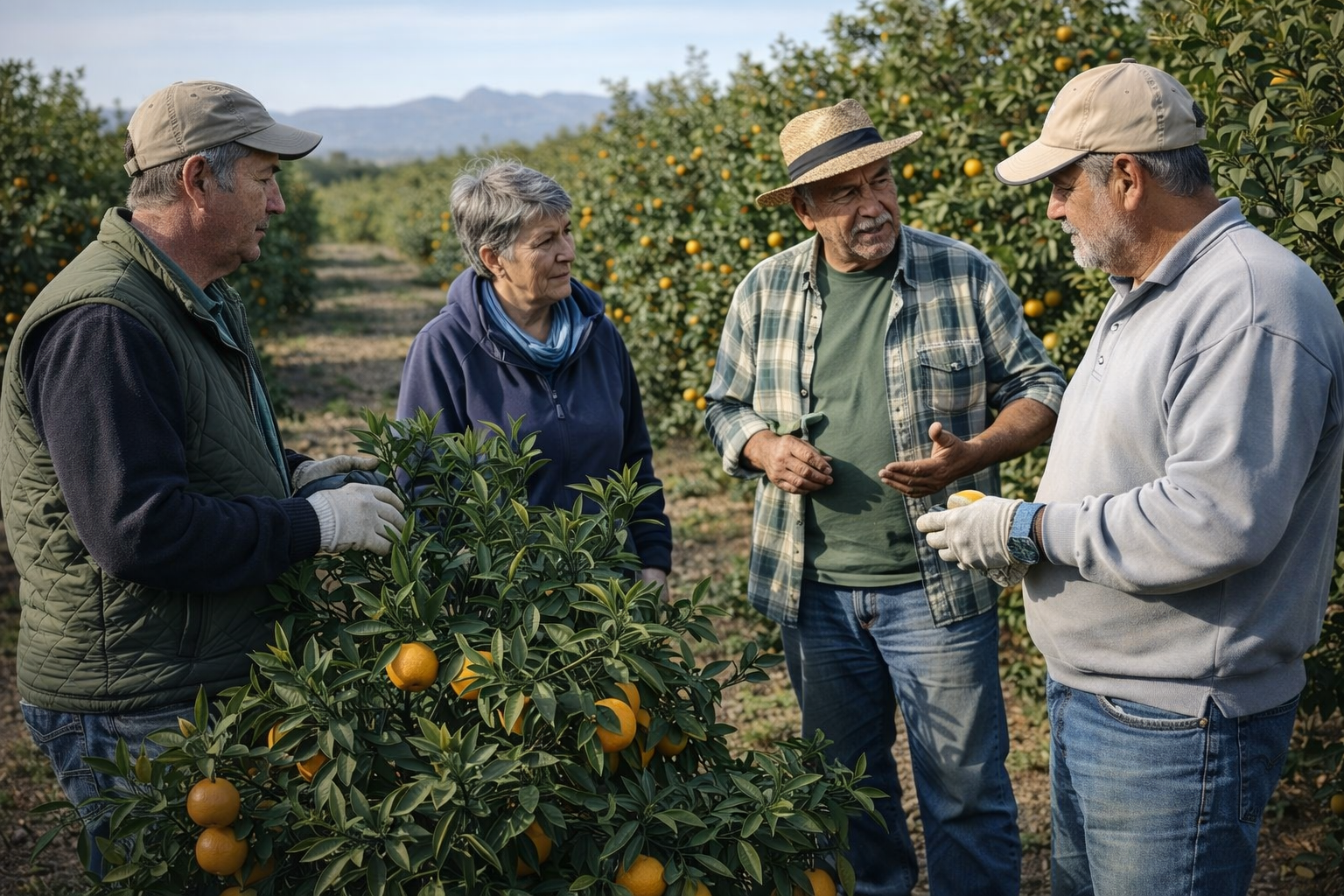
Phytosanitary alerts are increasingly becoming part of everyday life in the agricultural sector. They do not always indicate a serious problem, but they do trigger surveillance and control mechanisms that seek to protect crops and prevent greater risks. For farmers, these alerts mean paying closer attention to developments in the field and to the information provided by official and technical bodies.
More surveillance and observation in the field
When a phytosanitary alert is issued, daily work on the farm does not stop, but crop observation is intensified. Farmers pay closer attention to the condition of the trees, the appearance of the leaves and fruit, and any possible symptoms that may be abnormal.
This continuous monitoring allows incidents to be detected at an early stage, when it is still possible to act more effectively and minimize potential damage. In many cases, alerts are preventive in nature and seek to anticipate major problems.
Changes in the way we work and make decisions
Phytosanitary alerts also influence decision-making in the field. In such situations, technical recommendations are followed more rigorously and hasty actions that could be counterproductive are avoided.
Having clear and verified information helps farmers stay calm, prioritize prevention, and adapt their daily work without creating unnecessary uncertainty. Experience and technical advice play a fundamental role here.
The importance of information and coordination
In this context, information becomes a key tool. Keeping up to date with official communications, technical guidelines, and developments in the situation allows us to act responsibly and safely.
Coordination between farmers, technicians, and industry organizations is essential for surveillance and prevention measures to be effective. Sharing information and working in an orderly manner helps protect farms and the citrus industry as a whole.
In an increasingly demanding agricultural environment, prevention, information, and coordinated work remain key to successfully addressing the challenges facing the countryside.


