
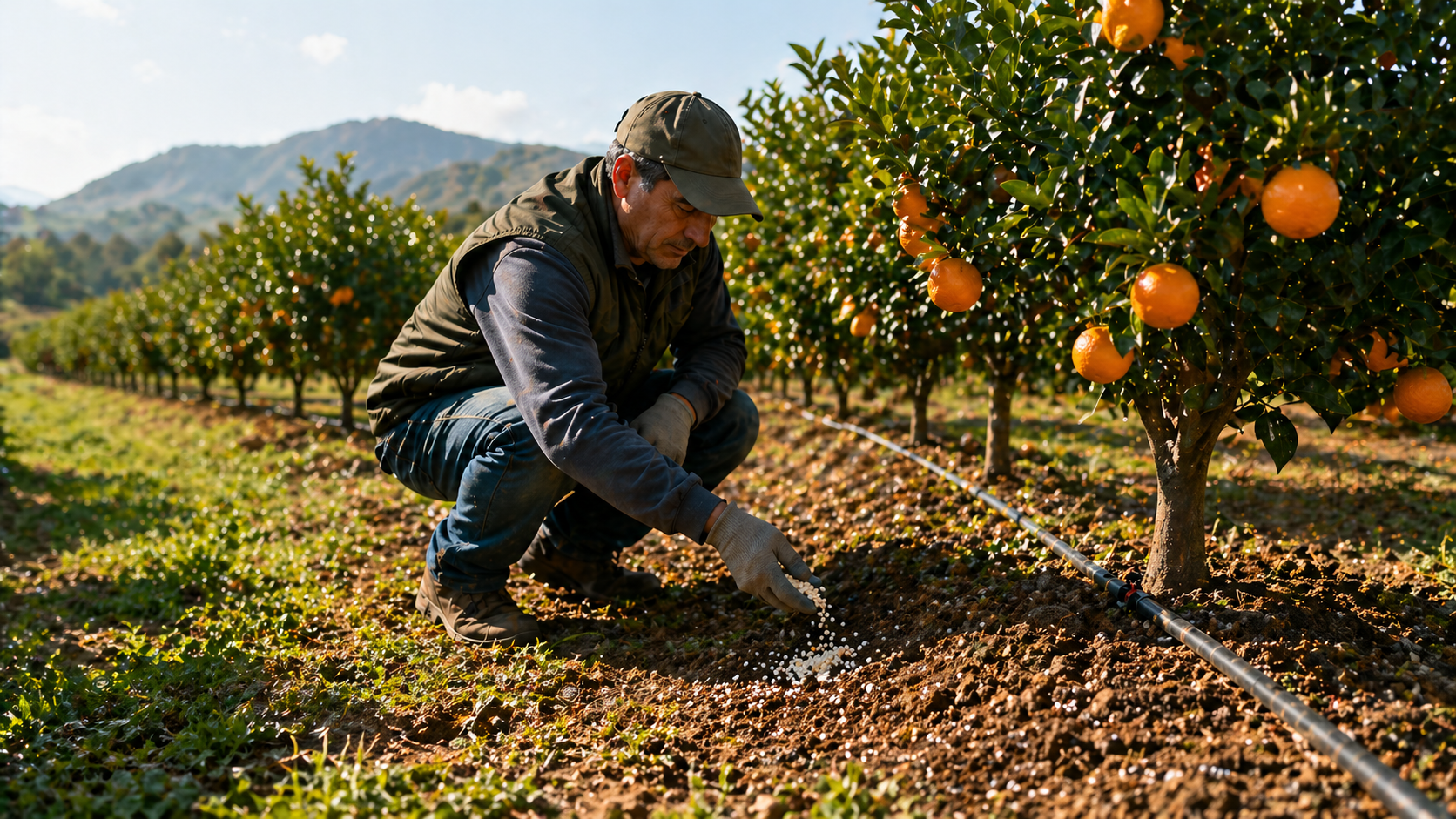
Fertilization is key to producing high-quality citrus fruits with good size, flavor, and yield. However, it’s not just about applying fertilizer; it’s about doing so at the right time and in a balanced manner. Knowing when to fertilize citrus trees is essential for optimizing production and caring for the tree throughout its entire life cycle.
Poorly planned fertilization can affect both the quantity and quality of the fruit. That is why it is important to understand the crop’s needs at each stage of the year and adjust nutrient inputs accordingly.
Citrus Fertilization Schedule
The citrus growth cycle clearly indicates the key stages when the tree needs nutrients. Throughout the year, fertilization should be timed to coincide with the stages of bud break, flowering, fruit set, and fruit development.
Spring: budding and blooming
In the spring, the tree enters a period of intense activity. This is when new growth and flowering occur, so it needs a balanced supply of nutrients, especially nitrogen.
At this stage, the fertilizer helps ensure good flowering and promotes the onset of fruit set.
Summer: Fruit Development
During the summer months, citrus trees focus their energy on fruit development. It is important to maintain a steady supply of nutrients, especially potassium, which directly affects fruit size and quality.
In addition, it is essential to combine fertilization with efficient irrigation to prevent losses and ensure proper absorption.
Fall: ripening
In the fall, fertilization should be more moderate. The goal is to support the fruit’s ripening without forcing the tree to grow.
Too much nitrogen at this stage can negatively affect fruit quality.
Winter: dormant period
During the winter, the tree goes dormant. At this stage, fertilization is minimal or even nonexistent, as the citrus tree’s nutritional needs are very low.
This period is crucial for preparing for the next growing season, assessing soil conditions, and planning future fertilization.
Tips for Efficient Fertilization
For composting to be truly effective, simply following a schedule isn't enough. It's important to follow a set of best practices that improve efficiency and reduce environmental impact.
First, it is advisable to conduct soil tests to determine the crop’s actual needs. This allows you to adjust the application rates and avoid over-application.
It is also important to invest in localized irrigation systems, which allow nutrients to be applied more precisely and efficiently.
In addition, it is becoming increasingly common to use more sustainable fertilizers and techniques that reduce environmental impact, in line with more responsible agricultural practices.
Knowing when to fertilize citrus trees is key to achieving a balanced, high-quality crop. Tailoring fertilization to each stage of the crop’s growth, combined with good planning and efficient use of resources, makes all the difference in the final result.


