
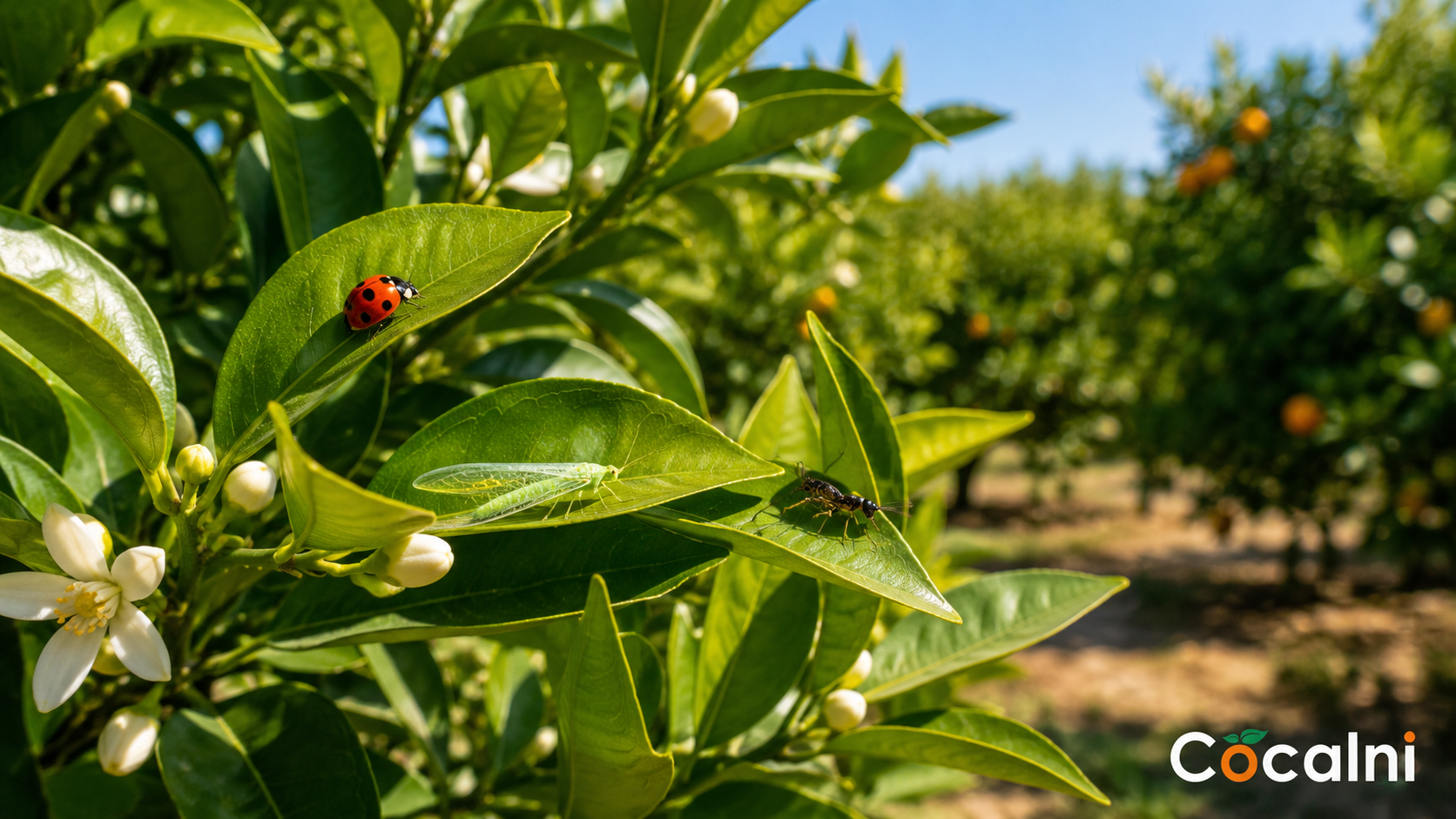
Citrus fields are home to a great biodiversity that goes far beyond the orange trees themselves. Although when we talk about insects we usually think of pests that can affect production, the reality is that many species play a fundamental role in the natural balance of the crop. These small allies help to biologically control harmful insects and contribute to maintaining healthier and more sustainable fields.
At Cocalni, we are committed to responsible and environmentally friendly agriculture. Encouraging the presence of beneficial wildlife is part of a strategy that helps reduce the pressure caused by certain pests and move toward increasingly sustainable production.
What are beneficial insects?
Beneficial insects are those that help farmers in a natural way. Some feed directly on pests that attack citrus trees, while others act as parasites of these insects or even help maintain the balance of the agricultural ecosystem.
Their presence is particularly important in a crop as widespread as citrus, where maintaining a balanced ecosystem is one of the best ways to prevent plant health problems.
Ladybugs: tiny aphid-eaters
One of the best-known examples is the ladybug. Both its larvae and adult ladybugs consume large quantities of aphids, a pest that can weaken the youngest shoots of the orange tree.
A single ladybug can feed on hundreds of aphids over the course of its life, making it one of the farmer's best allies.
Lacewings: True Experts in Pest Control
Lacewings are another of the most valued insects in agriculture. Although adults feed mainly on nectar and pollen, their larvae are true predators.
They are capable of feeding on aphids, mealybugs, whiteflies, and other small insects that can affect crop development.
Parasitoid wasps: a highly effective form of natural control
Despite their small size, parasitoid wasps play an essential role in modern agriculture. These species lay their eggs on certain insects considered pests, preventing them from continuing to develop.
Thanks to this behavior, they help keep populations of harmful insects under control without disrupting the natural balance of the crop.
Spiders and Other Natural Predators
Although they are not insects, spiders are also part of the beneficial fauna found in many citrus orchards. Along with other small predators, they capture numerous insects that could pose a threat to the orchard.
Their presence is an indicator that the ecosystem maintains a high level of biodiversity.
Biodiversity also protects crops
Promoting the presence of natural vegetation in certain areas, avoiding unnecessary treatments, and implementing integrated management strategies helps conserve these populations of beneficial insects.
More and more farmers are combining traditional knowledge with new agricultural techniques to harness these natural allies and create farms that are more sustainable and environmentally friendly.
Cocalni is committed to sustainable citrus farming
At Cocalni believe that innovation and respect for nature must go hand in hand. Biodiversity conservation, together with good agricultural practices, helps us produce high-quality citrus fruits and protect the environment for future generations.
Behind every orange lies a natural balance in which farmers, trees, and beneficial insects work together to produce a healthy, high-quality, and responsibly grown product.


