
In this article, we will discuss a variety of orange that, although we do not work with it at Cocalni, is interesting to learn about, as it is linked to the origins of today's varieties: the bitter orange.
The bitter orange, also known as the sour orange or Citrus aurantium, arrived on the Iberian Peninsula through Arab culture during the Andalusian period. Its presence not only transformed the landscapes of cities such as Seville, Cordoba, and Granada, but also became a symbol laden with spiritual, aesthetic, and emotional significance. Al-Andalus gardens, carefully designed to invite rest and contemplation, used the scent of orange blossom and the beauty of the fruit as poetic elements. Stories emerged in literature and folklore that associated bitter oranges with deep feelings such as nostalgia, longing, and impossible love.
A symbol of love and melancholy
In many Andalusian legends and poems, the bitter orange appears as a metaphor for loves that cannot be fulfilled. Its flavor, beautiful and evocative but intensely bitter, was compared to those affections that, despite their strength, were destined never to be consummated.
The orange tree as a witness to history
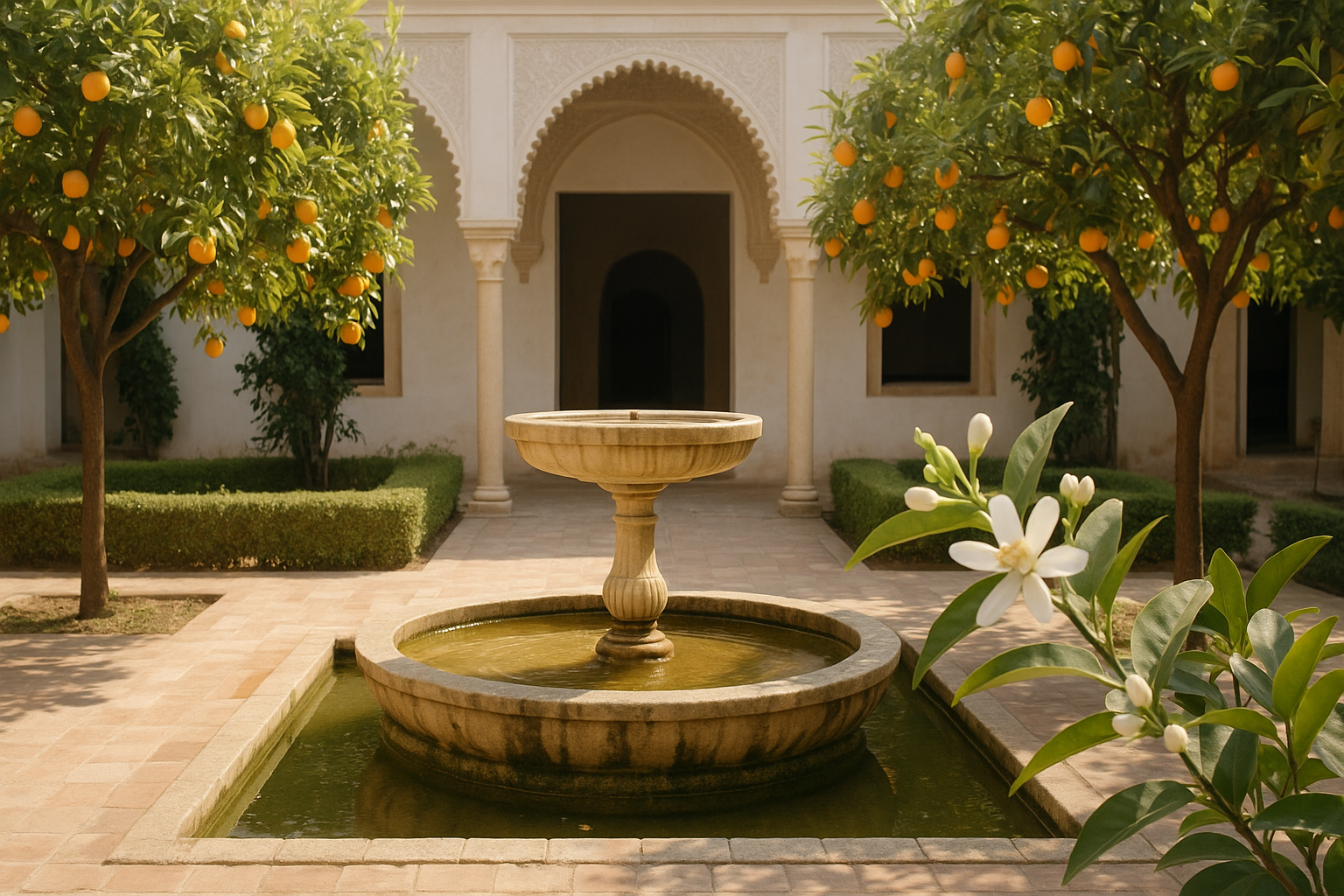
It is said that in the inner courtyards, where the water from the fountains sounded like a soft song, the orange trees were considered “silent witnesses” to furtive encounters, confidences, and promises that time took care of dissolving. The bitter orange, in this context, represented the sweetness that was sensed in the feeling and the bitterness of the fate that cut it short.
The orange tree in the gardens of paradise
In Islamic tradition, the garden is an earthly evocation of the Yanna, paradise. The presence of bitter orange trees in these spaces was due to their ability to perfume the air and beautify the surroundings with their round, shiny fruit. Some popular stories describe how travelers, upon entering a garden filled with orange blossoms, felt as if they were stepping into a piece of paradise. The bitter orange was, therefore, a sensory bridge between the everyday world and spiritual hope.
From Andalusian culture to Mediterranean identity
Over the centuries, the bitter orange took root in the Mediterranean, becoming a distinctive feature of cities such as Seville, which today has more than 40,000 orange trees lining its streets. Although many of the legends faded away, their symbolism remained. Today, the bitter orange represents cultural heritage, the beauty of the landscape, and the ability of peoples to transform a fruit into an icon full of meaning.


