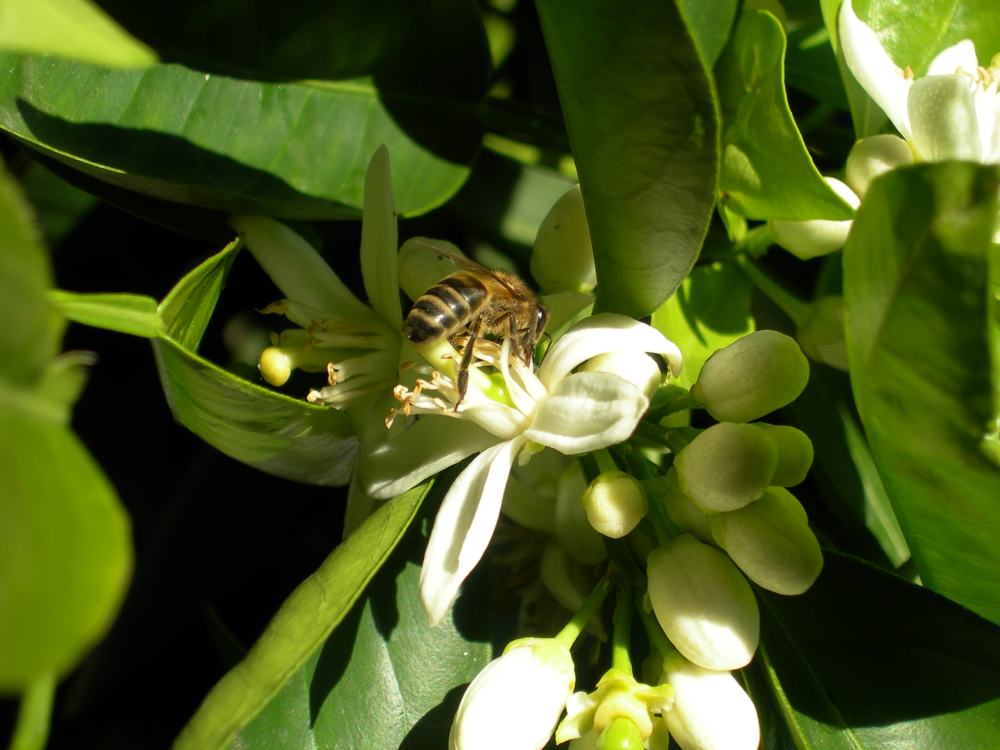
Pinyolà is a phenomenon that seriously affects the commercial quality of seedless mandarins and oranges in the Valencian Community. It is the unexpected appearance of seeds in varieties that are normally seedless, which reduces their value in the market and affects their export. This problem is linked to cross-pollination, in which pollen from fertile varieties is transported by bees to apirine varieties, fertilising their flowers and generating seeds.
Causes of ‘la pinyolà’ and the role of the bees
The main vector of pinyolà is cross-pollination between citrus varieties. While some mandarin varieties can develop without fertilisation, when exposed to pollen from hybrid varieties with fertile pollen, such as Ortanique, Nadorcott or Nova, the fruits develop seeds.
Bees are mainly responsible for this pollen transfer. Transhumant beekeeping, which moves hives to citrus groves to collect honey, intensifies this process. In certain seasons, the density of bees in citrus-growing areas has been up to three times higher than usual, which has increased cross-pollination and, therefore, pinyolà.
Economic and commercial impact of the pinyolà
The impact of the pinyolà goes beyond the appearance of the fruit. On international markets, Valencian mandarins have historically been valued for their absence of seedsThe new product, a key attribute for its commercialisation in countries such as France, Germany and the United Kingdom.
The new measures approved by the Consell
The Consell has given the green light to new measures to reduce cross-pollination and protect seedless citrus production. Among the main decisions is a ban on installing beehives within 4 km of citrus groves during flowering, a period which this year will run from 1 March to 31 May.
These regulations aim to guarantee the sustainability of Valencian citriculture without affecting beekeeping, which is essential for other crops and biodiversity.


